
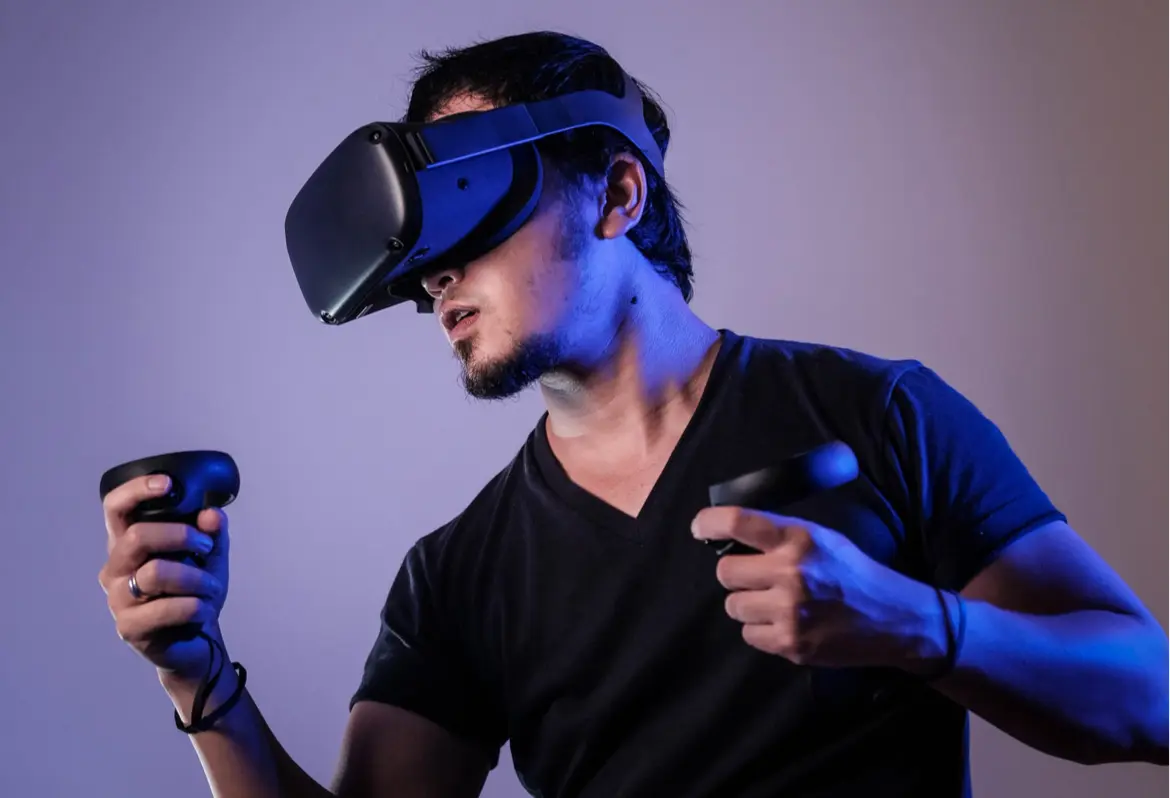
The next evolution of digital interaction isn’t just about screens—it’s about presence.
Modern immersive systems operate across two key dimensions:
Experience performance (rendering, latency, realism)
Spatial intelligence (interaction, context, behavior)
The real value emerges when platforms deliver both—creating environments that are not only visually rich but context-aware and interactive.
Two Layers of Immersive Intelligence
Experience Layer (Performance & Rendering)
Built for realism, speed, and seamless interaction.
Real-time 3D rendering and environments
Low-latency streaming and edge delivery
Device compatibility (VR headsets, AR glasses, mobile)
Physics engines and motion tracking
Best for: Gaming, simulations, virtual showrooms, training environments
Spatial Intelligence Layer (Context & Interaction)
Built for understanding users, environments, and intent.
Spatial mapping and environment awareness
Gesture, gaze, and voice interaction
Digital twins and contextual overlays
AI-driven personalization and adaptive experiences
Best for: Enterprise collaboration, remote assistance, industrial use cases
Why Metaverse & AR/VR Matter
Organizations investing in immersive technologies unlock next-generation engagement and productivity:
Move from 2D interfaces → 3D experiential platforms
Enable real-time collaboration across geographies
Enhance training, simulation, and decision-making
The result is a shift toward experience-driven digital ecosystems.
Where Immersive Tech Creates Impact
Metaverse and AR/VR technologies are transforming industries:
Retail & Ecommerce → Virtual try-ons, immersive shopping
Real Estate → Virtual property tours and digital twins
Healthcare → Surgical simulations, therapy, remote care
Manufacturing → Training, maintenance, and remote assistance
Enterprise Collaboration → Virtual workspaces and meetings
These environments combine visual immersion, real-time interaction, and AI intelligence to deliver outcomes beyond traditional interfaces.
Pro Tip Don’t just design for visuals— design for presence, interaction, and user behavior. Measure: Engagement time in immersive environments Interaction depth and repeat usage Performance latency and experience quality Conversion from immersive to real-world actions
🛡️ Trust, Identity & Safety in Immersive Worlds
As users spend more time in virtual environments, trust becomes critical:
Identity management and avatar authentication
Data privacy for spatial and behavioral tracking
Content moderation and safe interactions
Governance of virtual assets and environments
Immersion must be built on trust, safety, and transparency.