
Integrating Mechanical with Electronics Engineering
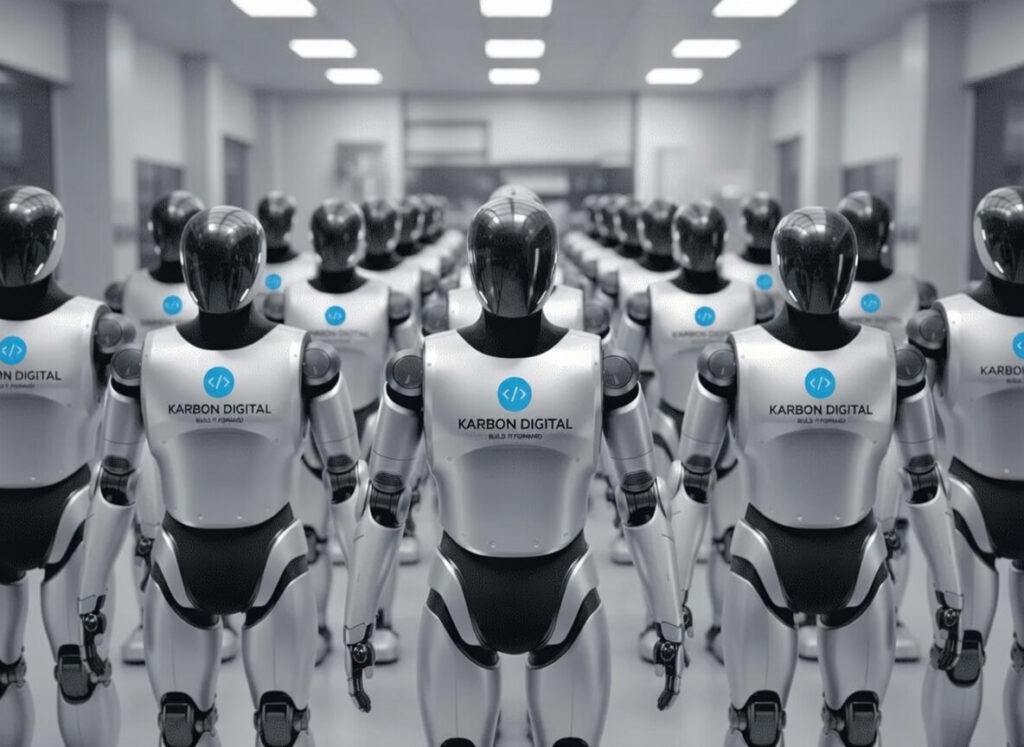
In the era of intelligent automation, robotics engineering is transforming how businesses operate. Karbon Digital delivers advanced Robotics Engineering Solutions that integrate mechanical systems, electronics, AI software, and cloud intelligence to create smart, adaptive machines.
Our robotics engineering capabilities combine AI, computer vision, sensor integration, and autonomous systems to design robots that operate safely and efficiently in modern work environments. From humanoid robotics integration to digital twin simulation and edge AI platforms, we help organizations build intelligent robotic systems that improve productivity and reduce operational complexity.
With expertise in AI engineering, cloud infrastructure, and robotics systems integration, Karbon Digital enables enterprises to adopt next-generation automation technologies that drive innovation and competitive advantage.
- Informed Decision-Making
- Operational Efficiency
- Personalized Experiences
- Predictive Capabilities
- Scalability
- Competitive Advantage
Advantages of Robotics Engineering
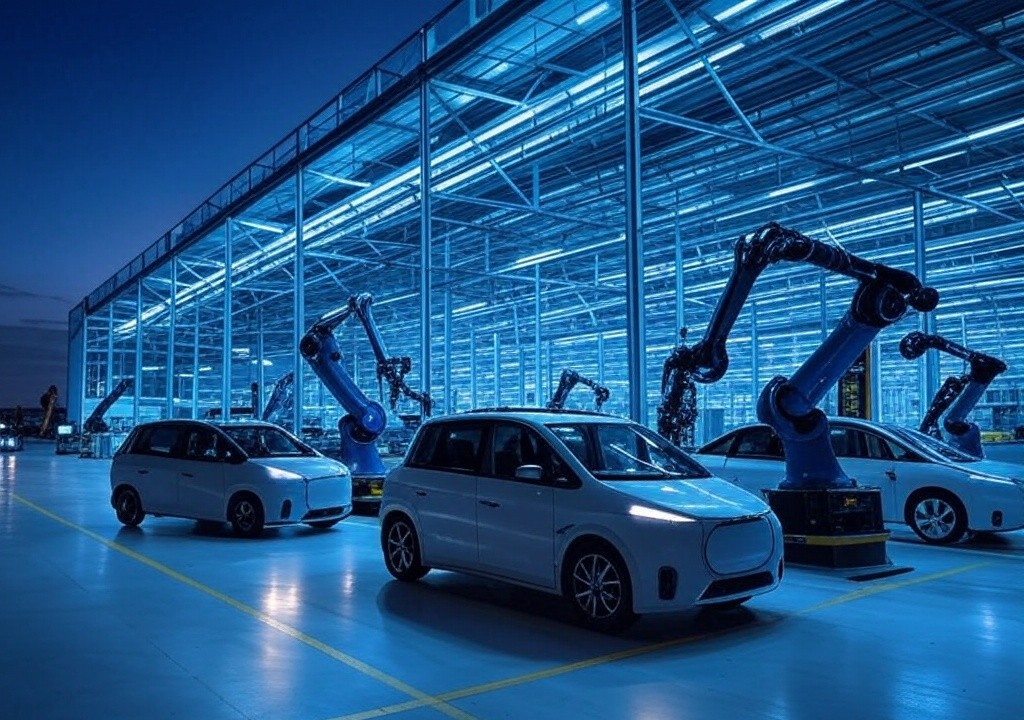
Robotics engineering enables organizations to automate complex, repetitive, and high-precision processes while improving safety, reducing errors, and maximizing operational efficiency. By integrating AI-driven intelligence with advanced mechanical, electrical, and software design, robotics solutions can perform tasks ranging from real-time process optimization and autonomous navigation to predictive maintenance and adaptive manufacturing. Our robotics systems are designed to seamlessly interact with humans and existing infrastructure, delivering scalable, reliable, and flexible automation across industries such as manufacturing, logistics, healthcare, agriculture, and retail. With a strong focus on innovation, safety, and sustainability, robotics engineering empowers businesses to unlock new levels of productivity, reduce operational costs, and drive competitive advantage.
Robotics Engineering Services
- Humanoid Systems Integration
- Digital Twin & Simulation Engineering
- Safety & Compliance Engineering
- Robotics Cybersecurity & Secure Operations
- Human–Robot Interaction (HRI) Design
- Robotics Image Processing
Certified Robotics Engineering Professionals involved in your Projects
At Karbon Digital, we provide access to certified Robotics Engineering professionals who bring deep expertise in automation, intelligent systems, AI-driven robotics, and advanced manufacturing technologies. Our team of industry-certified engineers designs and implements scalable, precision robotics solutions that enhance operational efficiency, safety, and productivity across industries. From automating complex workflows and deploying collaborative robots to integrating AI-powered sensing and control systems, our experts deliver robust, future-ready solutions. With a strong focus on innovation, reliability, and compliance, Karbon Digital empowers organizations to harness robotics technology to optimize operations, reduce costs, and gain a competitive edge.
What do we do in Robotics Engineering ?
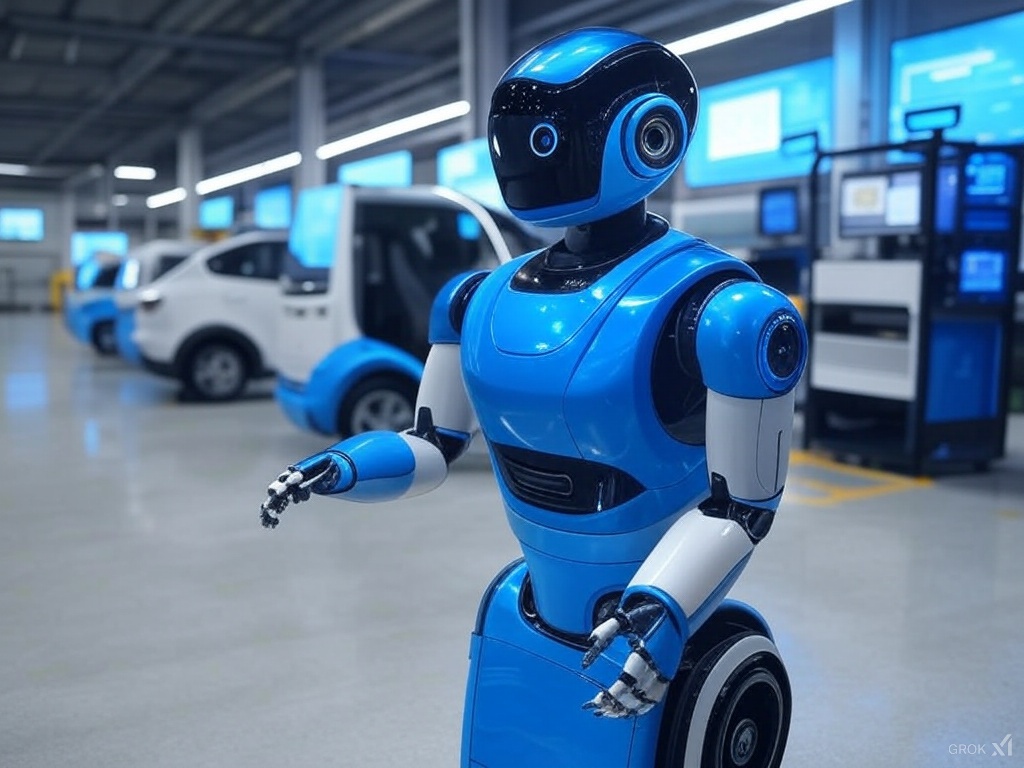
As humanoid robots begin operating within human workspaces, organizations will increasingly require specialized integration services to adapt existing environments for safe and efficient collaboration. Most facilities today are designed primarily for human workflows, so introducing humanoid robots requires thoughtful adjustments to infrastructure such as power supply, lighting conditions, floor layouts, doorways, and workstation configurations. By retrofitting these environments, businesses can ensure that robots can move, interact, and perform tasks effectively without disrupting normal operations.
Another critical component of humanoid robotics integration is connecting robots with enterprise digital systems. Modern robots must communicate with platforms such as Enterprise Resource Planning (ERP), Warehouse Management Systems (WMS), and Manufacturing Execution Systems (MES) to exchange operational data and coordinate tasks. This integration enables robots to become active participants in the digital enterprise ecosystem, allowing them to receive instructions, update workflow data, and respond dynamically to operational changes in real time.
Skilled robotics systems integrators play a vital role in designing environments where humans and robots can work together safely and productively. By combining expertise in automation, robotics engineering, and workplace design, integrators create optimized layouts and workflows that support smooth collaboration between people, machines, and other automation systems. The result is a highly efficient, future-ready workspace where humanoid robots enhance productivity while maintaining safety, flexibility, and operational continuity.
Digital twin technology is emerging as a critical foundation for designing, testing, and validating humanoid robot operations before they are deployed in real-world environments. By creating detailed virtual replicas of both robots and the physical spaces they operate in, engineers can model movements, navigation paths, task execution, and safety zones with high accuracy. These digital environments allow teams to visualize how humanoid robots will interact with people, machinery, and infrastructure, ensuring that systems are properly designed before physical deployment begins.
Using digital twins, engineers can simulate a wide range of operational scenarios in real time. This includes testing different workflows, evaluating robot mobility in constrained environments, and ensuring that safety protocols are properly implemented. These simulations make it possible to refine robotic behaviors, optimize facility layouts, and assess performance without interrupting ongoing operations or risking damage to expensive equipment.
Another key advantage of digital twin engineering is its ability to support predictive analysis and rapid prototyping. Engineers can quickly test design modifications, software updates, and new automation strategies within a virtual environment before implementing them in the physical world. This significantly reduces development time, lowers operational risks, and enables organizations to innovate faster while maintaining a high level of system reliability and safety.
As humanoid robots become more dexterous and capable of performing complex tasks, simulation-driven commissioning will become a standard practice across industries. Digital twins will continuously synchronize real-world robot data with their virtual counterparts, enabling ongoing optimization and performance improvements. This closed-loop system will allow organizations to enhance operational efficiency, improve safety, and accelerate the adoption of humanoid robotics in modern workplaces.
Humanoid robots depend on advanced edge AI systems that combine perception, language understanding, and motion planning to operate effectively in real-world environments. These systems allow robots to interpret visual inputs, recognize objects, understand spoken instructions, and respond with coordinated physical actions. Because humanoids often work in dynamic, human-centered spaces, their AI must process information instantly and make decisions in real time to ensure smooth and safe interactions.
To achieve this level of responsiveness, engineering teams focus on optimizing AI models specifically for edge computing hardware. Platforms such as specialized GPU-enabled modules and custom system-on-chip (SoC) architectures provide the processing power needed for robotics applications while operating directly on the device. By running AI models locally on the robot, these systems reduce latency and enable faster decision-making without depending on continuous cloud connectivity.
A key part of this engineering effort involves training, compressing, and deploying sophisticated cognitive models that can run efficiently on edge hardware. Techniques such as model optimization, quantization, and hardware-aware training allow large AI models to perform complex tasks while using fewer computational resources. This enables humanoid robots to perform advanced capabilities such as environmental awareness, natural language interaction, and intelligent task planning.
Edge AI architecture also improves safety, reliability, and data privacy for humanoid robotics systems. Because most data processing occurs locally on the robot, sensitive information does not need to be transmitted constantly to cloud servers. This approach ensures faster responses, more reliable operations in environments with limited connectivity, and stronger protection of operational data while allowing humanoid robots to function autonomously and securely.
Safety engineering will play a central role in the successful deployment of humanoid robots in workplaces and public environments. As robots begin working alongside people, organizations must ensure that these systems operate within strict safety parameters to prevent accidents and protect human workers. Safety engineering services focus on identifying potential hazards, evaluating operational risks, and designing systems that allow robots to function safely in dynamic, human-centered environments.
A critical aspect of robotics safety engineering involves conducting comprehensive risk assessments and implementing fail-safe mechanisms. Engineers analyze how robots move, interact with objects, and respond to unexpected situations to ensure safe operation. These safeguards may include collision detection systems, emergency stop mechanisms, redundant sensors, and controlled motion planning that allows robots to immediately halt or adjust their behavior when risks are detected.
Another key responsibility of safety engineering teams is ensuring compliance with recognized robotics safety standards and regulatory frameworks. Robotics systems must align with global industrial and safety guidelines, including established engineering standards that govern machine safety, human-robot collaboration, and system reliability. Compliance with these standards helps organizations build trustworthy robotic systems that meet regulatory expectations and industry best practices.
As humanoid robots gain greater levels of autonomy, ongoing monitoring and governance will become essential. Safety engineering teams will establish real-time monitoring systems, incident response protocols, and continuous safety audits to ensure that robots operate responsibly throughout their lifecycle. In many industries, certified safety validation and regulatory approvals will become mandatory before humanoid robots can be deployed commercially, reinforcing the importance of safety engineering as a foundational component of robotics adoption.
Connected humanoid robots introduce complex cyber-physical vulnerabilities that traditional IT security cannot fully address. Because these robots operate in both digital and physical domains, a breach can have real-world consequences, from compromised data to unsafe physical interactions. Cybersecurity engineering for humanoids focuses on identifying these unique risks and designing robust frameworks to protect both the robots and the environments in which they operate.
A primary focus of cybersecurity services is securing control systems and communications between robots and enterprise networks. This includes encrypting data streams, implementing strong authentication for over-the-air (OTA) updates, and monitoring robot networks for anomalies or suspicious behavior. By maintaining secure and reliable communication channels, organizations can prevent unauthorized commands, tampering, or interception of sensitive operational data.
Specialized penetration testing is another essential component of humanoid cybersecurity. Security engineers simulate attacks on robotic systems to identify vulnerabilities in hardware, software, and network interfaces before they can be exploited. Coupled with compliance frameworks aligned to global cyber safety standards, these services ensure that humanoids are not only technologically advanced but also resilient against potential cyber threats.
With humanoids capable of physical movement and manipulation, cybersecurity is directly linked to safety, liability, and organizational trust. Unauthorized access or data breaches could result in operational disruptions, physical harm, or loss of sensitive information. By implementing comprehensive cyber-physical security strategies, firms can protect their robotic investments, maintain regulatory compliance, and foster confidence among employees, clients, and the public in the safe deployment of autonomous humanoids.
As humanoid robots begin to operate in workplaces, homes, and healthcare environments, their successful adoption will rely heavily on human acceptance and seamless interaction. Human–Robot Interaction (HRI) design services focus on creating intuitive, natural interfaces that allow people to communicate with robots effortlessly. By integrating speech recognition, gesture interpretation, emotion sensing, and real-time feedback systems, these services ensure that robots behave in ways that are understandable, predictable, and comfortable for human collaborators.
Effective HRI design goes beyond technical functionality to consider human psychology and ergonomics. Robots must respond appropriately to verbal commands, body language, and environmental cues while providing clear signals of their intentions. This helps build trust, reduces anxiety, and encourages collaboration, especially in settings where humans and robots share physical spaces. Thoughtful interface design ensures that interactions feel natural rather than mechanical or intrusive, making technology adoption smoother and more widely accepted.
Training programs are also an essential part of successful human–robot integration. Employees, caregivers, or home users must learn how to supervise, collaborate with, and guide humanoids safely and effectively. Structured training equips humans with the knowledge to interpret robot behavior, provide instructions, and troubleshoot minor issues, fostering confidence and competence in everyday interactions.
By combining intuitive HRI design with comprehensive training, organizations can ensure that humanoids integrate seamlessly into human teams. This dual approach minimizes resistance to automation, enhances productivity, and promotes a collaborative environment where humans and robots work together efficiently and safely, creating a foundation for widespread adoption across industries.
“Karbon Digital has transformed our robotics initiatives. Their expertise in data engineering, AI analytics, and cloud-native solutions enabled us to build a scalable, high-performance infrastructure that powers real-time decision-making and drives operational efficiency. By seamlessly integrating with our workflows and optimizing AI models and data pipelines, they unlocked deeper insights, improved agility, and accelerated our AI transformation. Their commitment to innovation and excellence makes them a trusted partner in shaping the future of intelligent, data-driven operations.”
Jason Lee, VP of Robotics

FAQs about Robotics Engineering
Robotics Engineering combines mechanical design, electronics, AI, and automation technologies to develop intelligent machines capable of performing complex tasks autonomously or collaboratively with humans.
It improves operational efficiency, reduces human error, automates repetitive or hazardous tasks, enhances safety, and enables data-driven decision-making across industries.
Services include humanoid systems integration, digital twin simulation, AI-powered robotics, safety and compliance engineering, human–robot interaction design, and cybersecurity for robots.
Through human–robot interaction (HRI) design, safety engineering, and workspace optimization, robots can collaborate safely with humans without disrupting operations.
Karbon Digital follows global standards such as ISO and ANSI for robotics safety, implements fail-safe designs, and applies cybersecurity measures to protect control systems and data.
Implementation timelines vary by project complexity, but services like system design, simulation, AI integration, and workspace optimization are planned to minimize disruption and accelerate deployment
Humanoid robots can connect with ERP, WMS, MES, and cloud platforms for real-time data sharing, workflow automation, and operational optimization.